Save the mole!
Ramblings, rituals and remedies from a Herefordshire smallholding

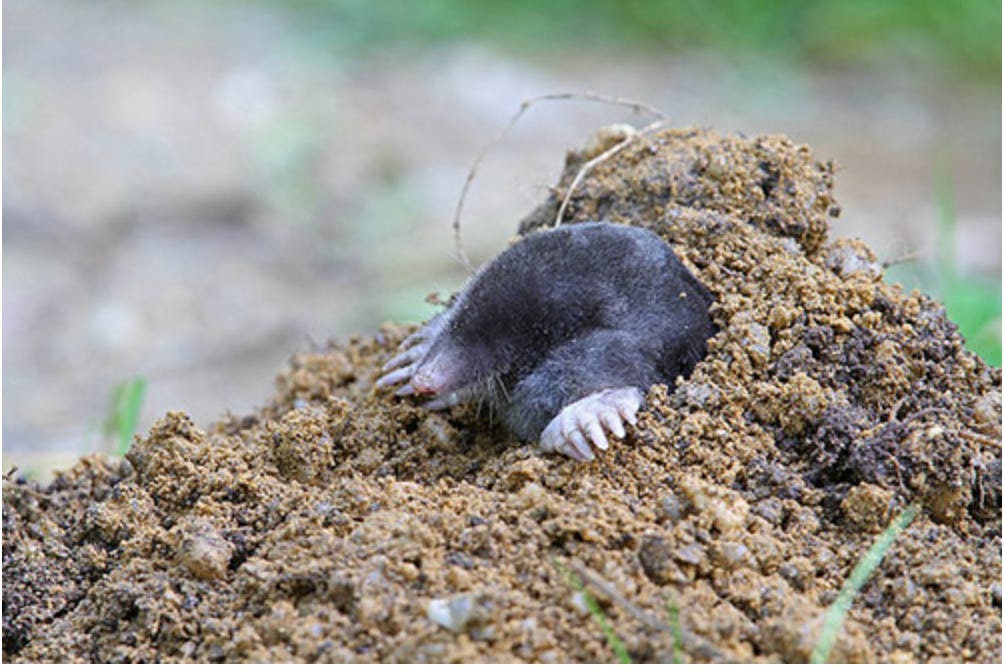
As Imbolc approaches, it’s not just the plants (and the lazier among us) that are beginning to stir. Deep beneath our feet, the mole is busy tunnelling, pushing through the soft earth with its over-sized white paws in search of worms. Piles of freshly dug earth start to appear in fields, verges and gardens like an eruption of acne.
Unfortunately, many a gardener regards these heaps of soil as an enemy invasion and will not rest until the ground is flat once more and the small mammal responsible is dealt with. It is the misfortune of this otherwise blameless creature that its subterranean progress results in heaps of earth. Its sole crime is to make gardens look a bit messy for a while.
The Parish Council in this village used to employ a mole catcher to rid the playground of these bumps of earth, worrying that children might trip over them or that the mower would get clogged up with spoil. A group of us thought this ridiculous and cruel, and petitioned to stop the trapping and poisoning of the moles. To its credit, the council agreed – if we got rid of the molehills by ‘natural methods’. So now we take it in turns to flatten the molehills and I have a rake in the back seat of the car in readiness for mole duty. We have been diligently raking molehills three or four times a week for almost two years now, which can be a pain truth be told, but it has also helped me understand and respect the creature that creates them.
The word ‘mole’ is said to come from the 14th-century English word ‘moldwarp’ meaning ‘earth thrower’.
Rather than see these industrious mammals as pests, wouldn’t it be great if we welcomed them into our gardens and recognised the benefit they bring. They are part of nature’s grand scheme of things after all, contributing to the health of the soil by turning it, draining it and mixing its nutrients. You know you have healthy, worm-rich soil when molehills appear. Molehills also make excellent nursery beds for wildflowers. Even on farmland, moles have a role, aerating soil and eating crop-damaging larvae – they were once deliberately introduced to control cockchafer beetles.
Because they live underground, moles escape most people’s attention and knowledge of them is scant. Did you know, for example, that the series of molehills across your lawn was created by a single mole? After mating, they live a solitary life in the darkness with smell and touch their only means of seeking and finding prey and future mates.
The only time moles venture above ground is when they are young and in search of a burrow of their own. These burrows can be hundreds of metres long and are dug at various depths to allow for droughts and for low temperatures. Powerful diggers with strong shoulders, moles have white, paddle-like front legs which look remarkably like human hands, a pink pointed snout, tiny eyes and a short tail. They weigh 80g and need to eat 50g of worms and grubs a day to survive. To ensure a regular supply, they bite worms in the head to immobilise them, then store them in chambers called ‘fortresses’, dozens at a time.
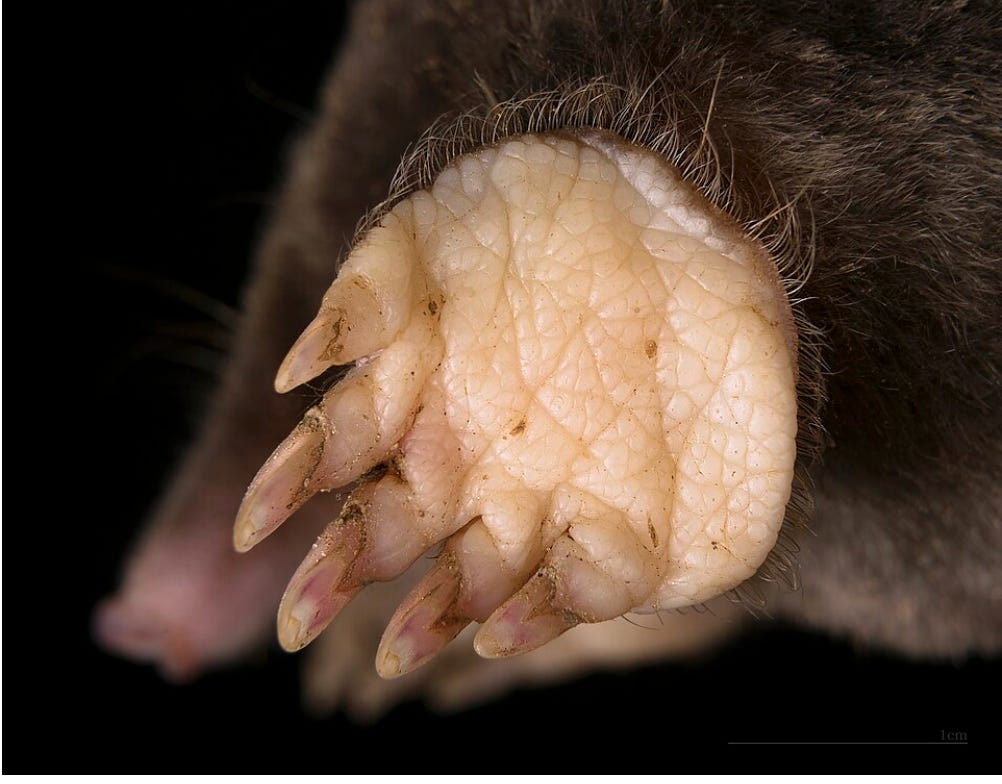
Moles used to be trapped for their velvety pelts and their paws were cut off (often when the creature was still alive) for good luck and to cure a variety of illnesses. Thankfully that is no longer the case, but now they are killed because they make a mess of our lawns and golf courses. I reckon it is time to cherish the inherent worth of this blameless creature with which we share our world, even if that is sometimes at a small cost to ourselves. It only takes a second or two to rake over a molehill after all.
Photographs by Christoph Moning. Information from ‘Moles’ by Dr Rob Atkinson (The British Natural History Collection).
A RITUAL FOR IMBOLC
February can be a cold, bleak month with rain dampening the spirits and mean-spirited winds whipping you quickly indoors. This is a good opportunity to stay warm and snug in a deep armchair listening to the rain patter against the window, but don’t miss the first stirrings of spring beyond the back door. Fresh shoots of nettle and wild garlic are appearing, and bulbs are poking through sodden soil to remind you that this is turning point of winter, the darkest days are over and spring is on its way.
The fire festival of Imbolc (2 February) celebrates this moment, the halfway point between the winter solstice and the spring equinox. Imbolc is a Celtic word that means ‘in the belly’, or ‘in the womb’ a reference to the imminent birth of lambs, and more generally to seeds pushing down roots and preparing to emerge as new shoots.
Imbolc is presided over by the goddess Brigid, whose day it is. She is the fearless and powerful Irish Celtic goddess of fire, fertility, crops, poetry and the home. Offerings and rituals associated with her are carried out now, with purification and cleansing ones being especially effective as they draw on her powers as goddess of the home as we prepare the house for spring.
Try these:
* Surround yourself with candles or light a fire and listen to it crackle and burn. As it burns, let go of the past and think about what you want your future to look like. What changes will you make? It is the time to forge exciting projects in the furnace of winter.
* Fasten a sprig of rowan or hanging a bunch of rowan twigs from your front door to protect your home. Even better, plant a rowan tree in the garden near the house.
* Carry a bunch of snowdrops from room to room on Imbolc morning for a type of purification known as white cleansing.
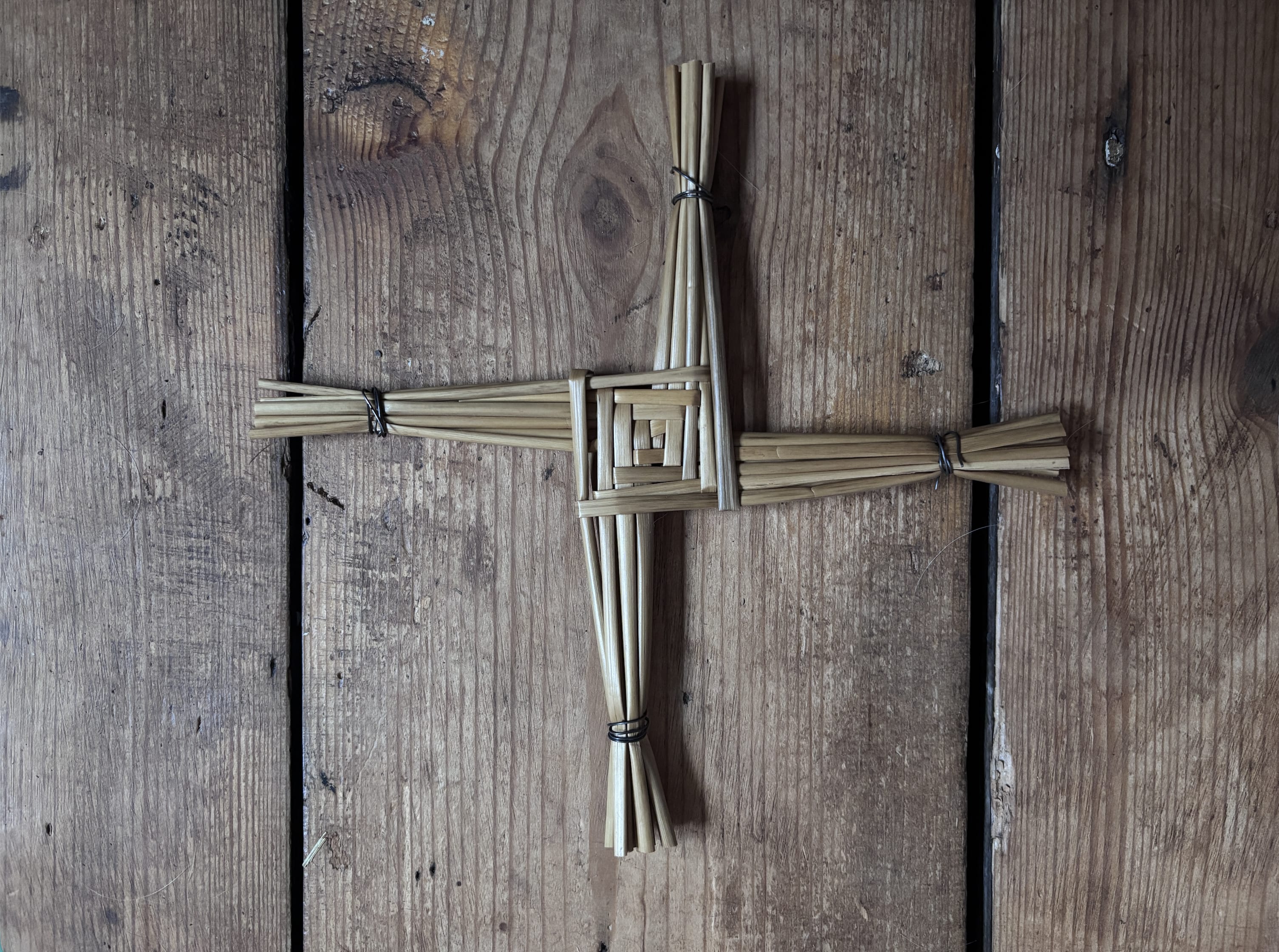
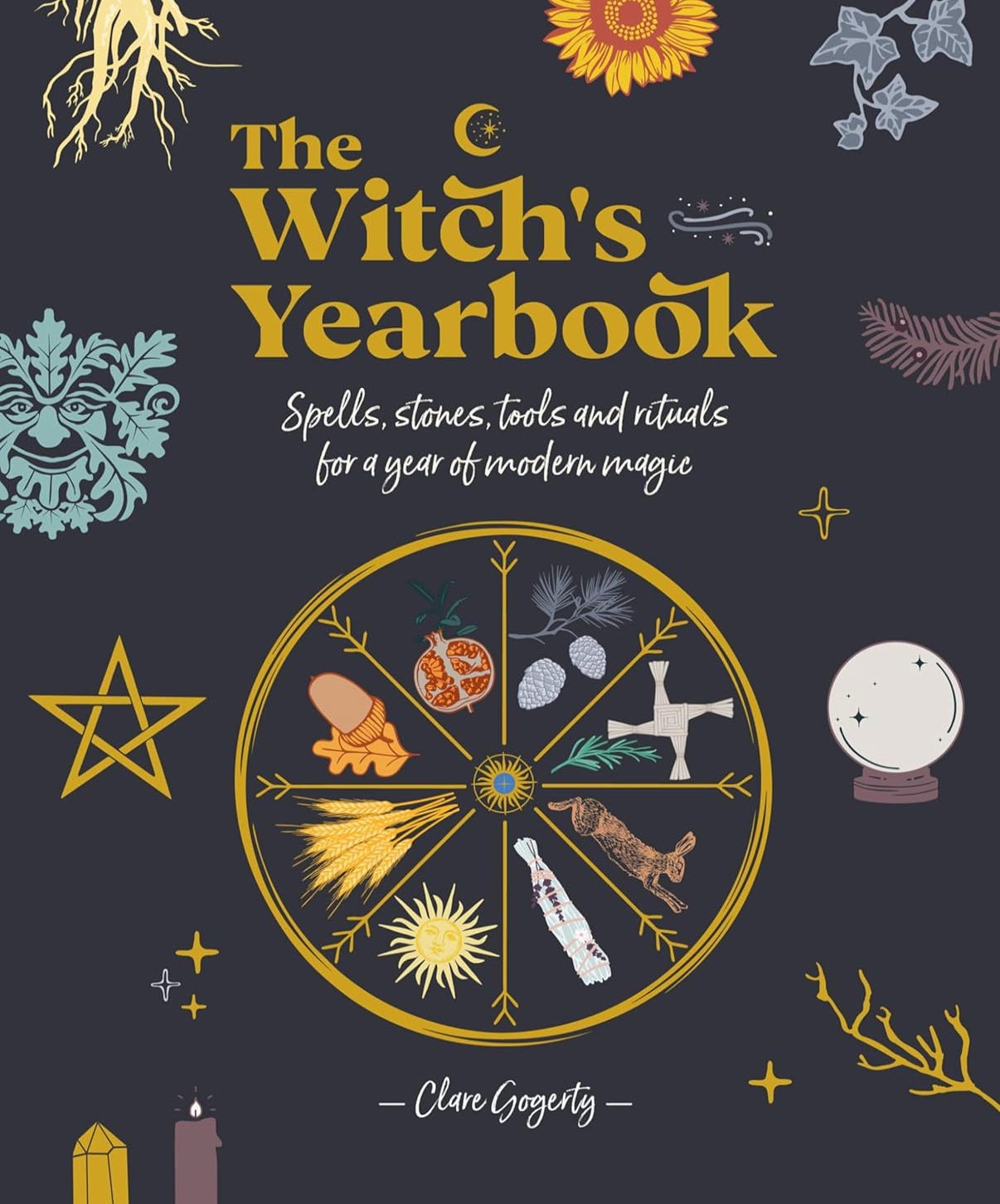
* Make a Brigid cross (you’ll have to look in my book The Witch’s Yearbook, published by Verbena, for instructions!) This is one I made earlier…
REMEDY
Dandelion flowers do not appear until later in the year, but their roots are sweetest and plumpest now and can be dug up and added to soups or infused for teas. A dandelion tonic was once regarded as a powerful remedy and used to cure ailments such as jaundice and kidney complaints. It can also be used as a cleansing drink and to generally aid digestion. Its high levels of vitamins A, B, C and D will provide the necessary winter boost.
Taken from my book Dandelion, one of six books in The Little Wild Library series. (Verbena).